Washoe County
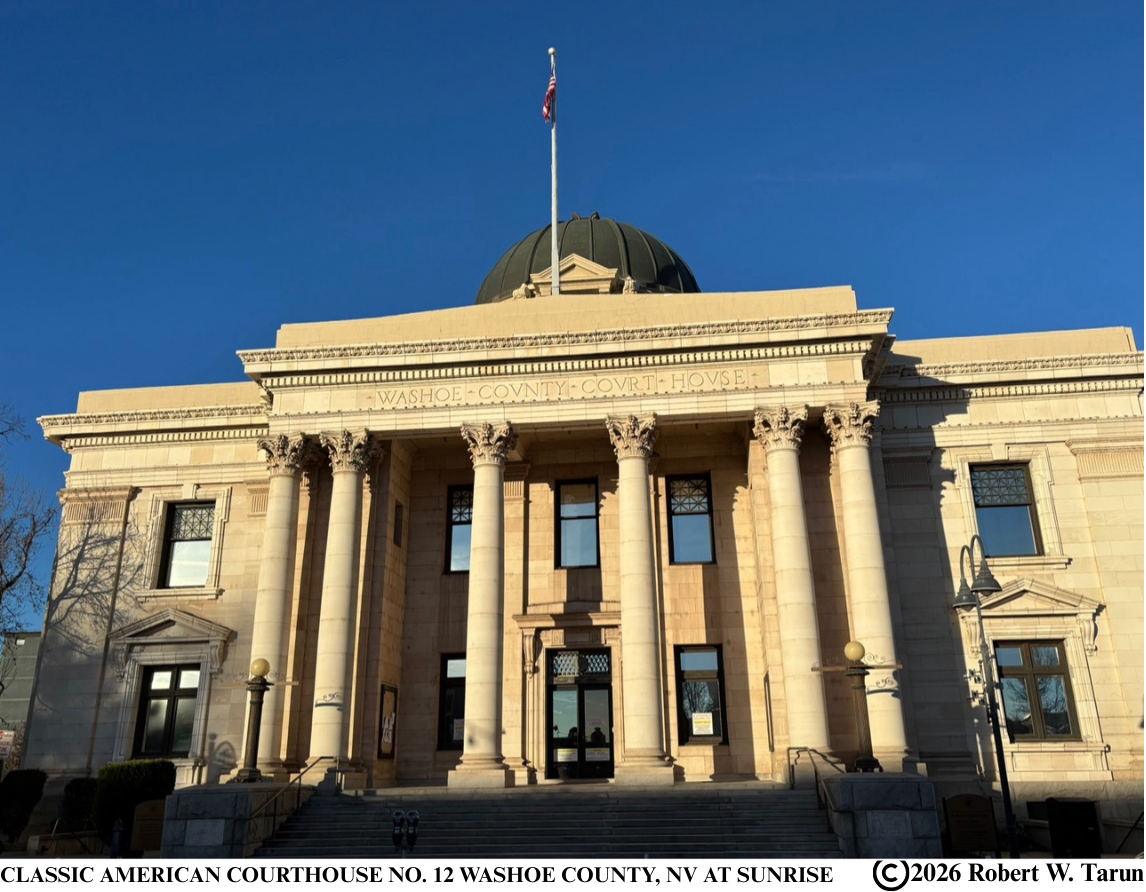
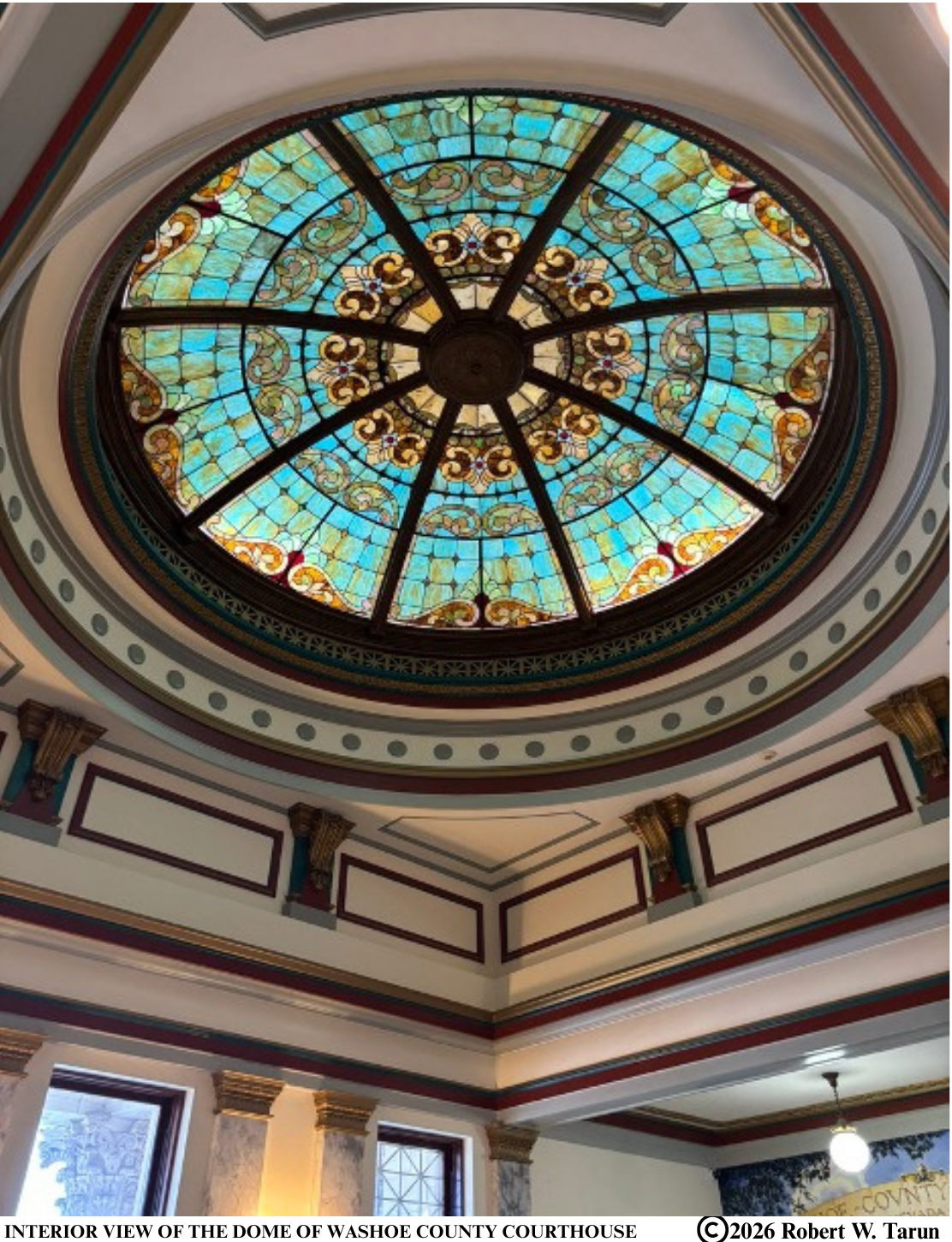

In 1909 Washoe County Nevada approved the construction of a Beaux Arts courthouse which was completed in 1911 at a cost of $250,000. Its prolific architect Frederic de Longchamps was renowned for designing courthouses in Nevada and California, including Clark (Las Vegas), Pershing (Lovelock), Lyon (Yerington), Douglas (Minden), Ormsby (Carson City), Humboldt (Winnemucca), Alpine (Markleeville, CA) and Modoc (Alturas, CA) counties.
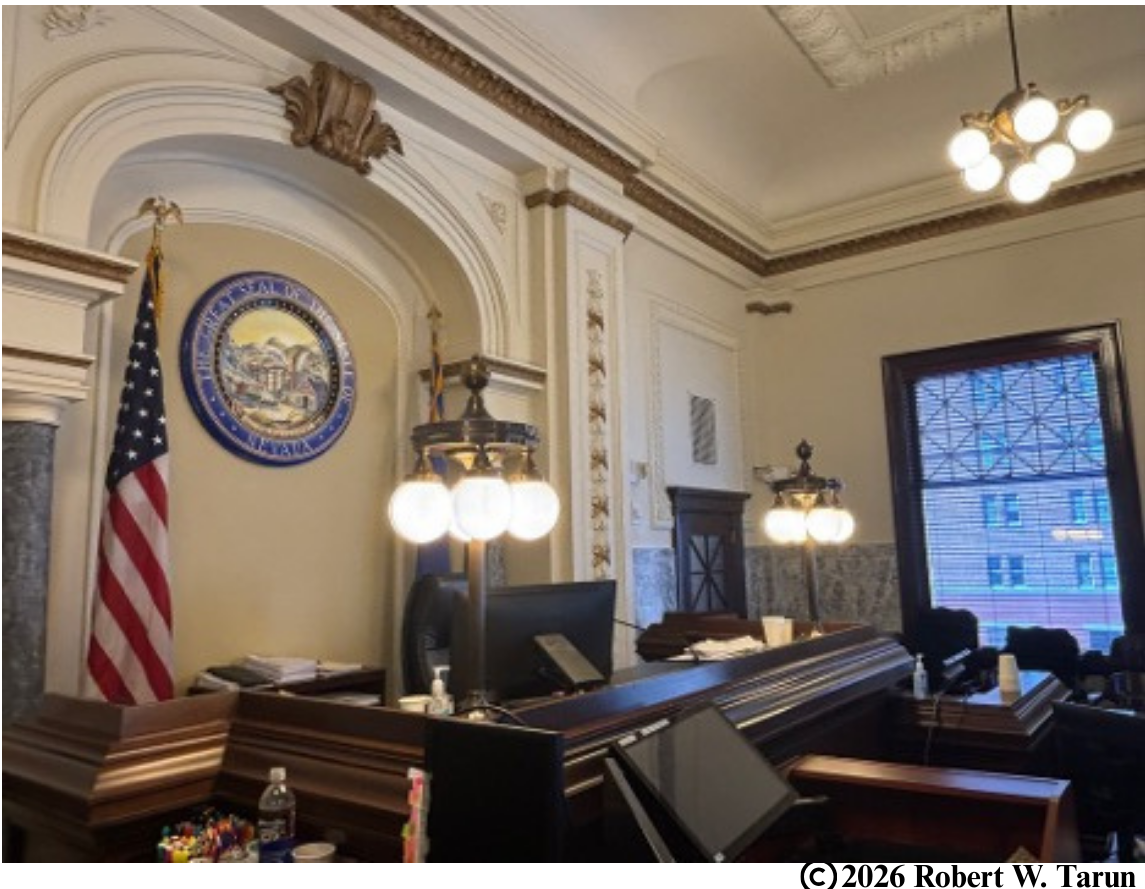
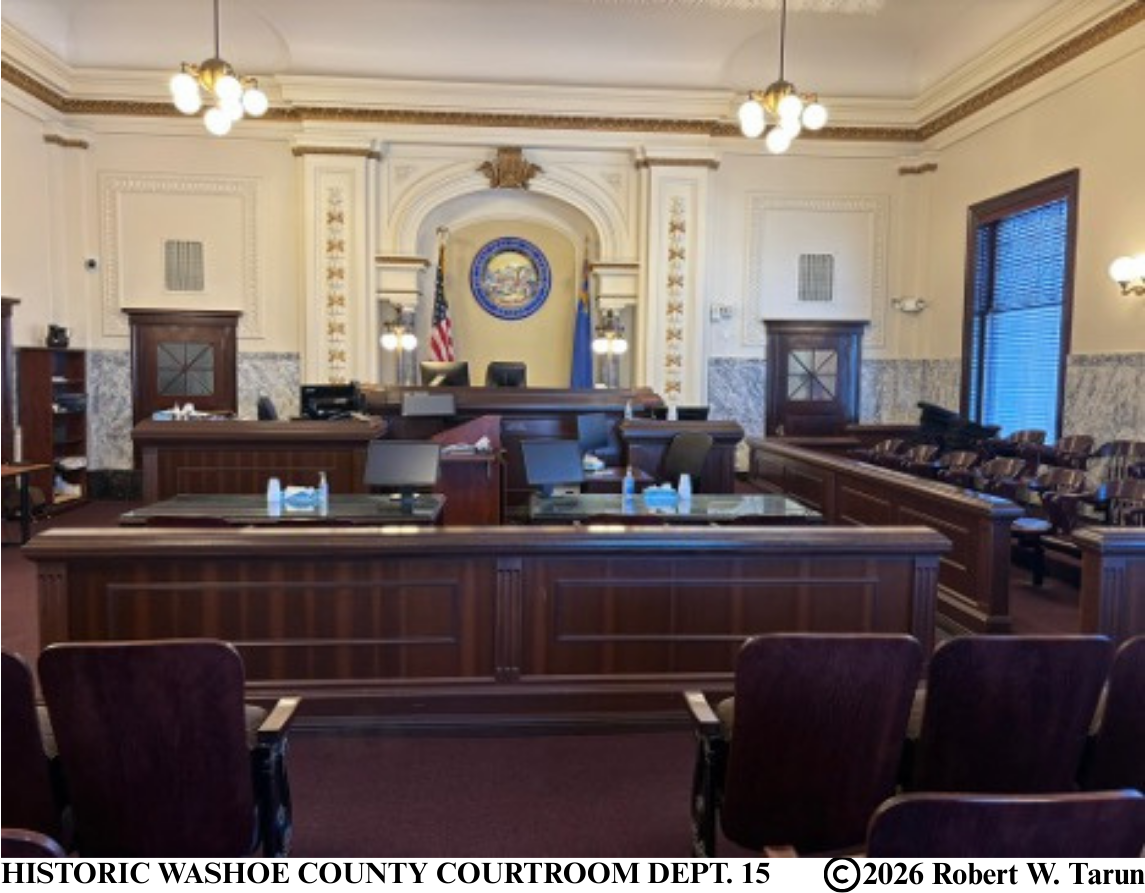
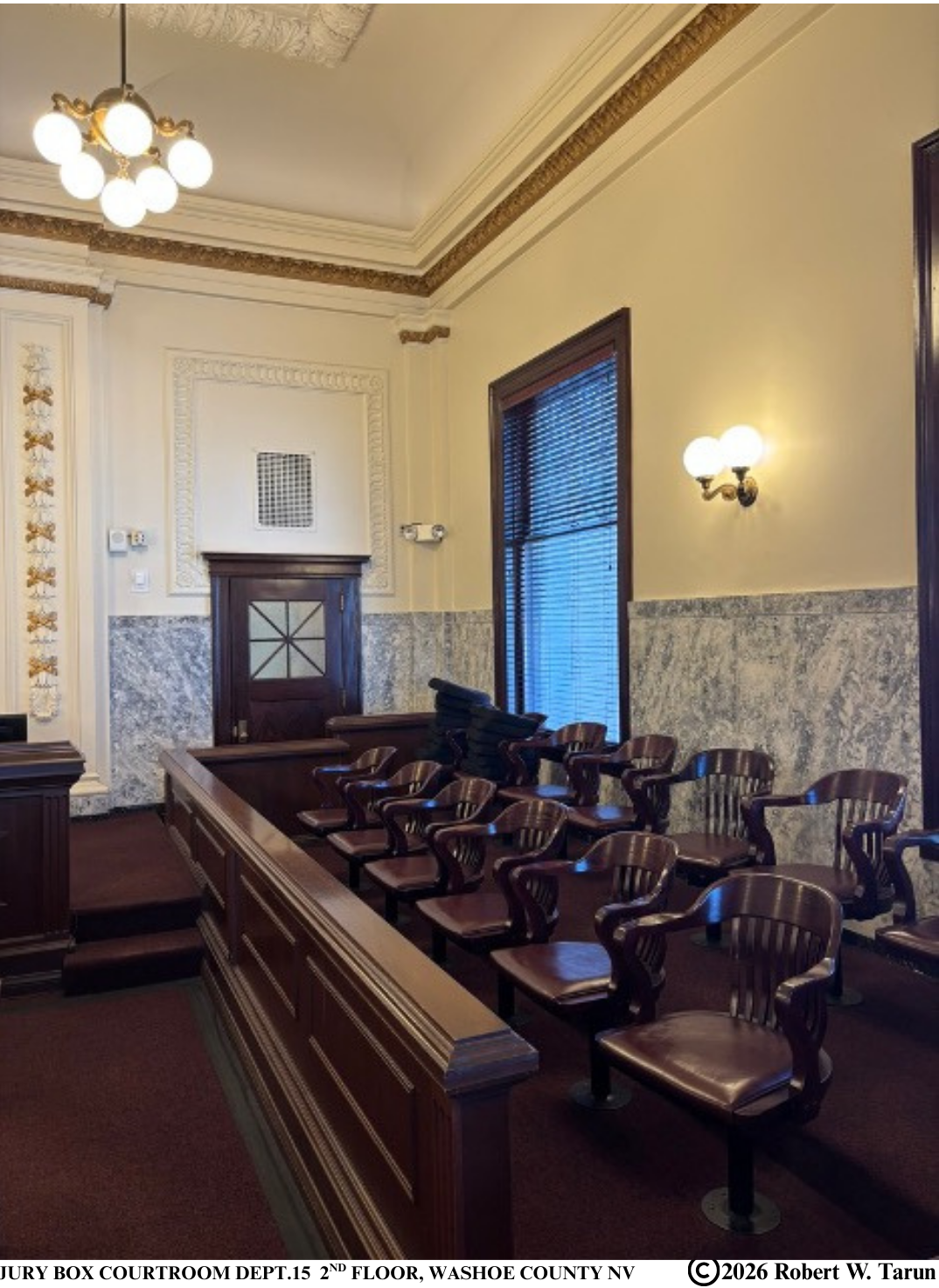
The two-story Washoe County Courthouse features Classical Revival architecture with Beaux Arts influences. The building is crowned with a magnificent stained-glass copper-ribbed dome. The outstanding feature is the central Corinthian portico with paired end columns and two central columns. Double doors open into the second-floor historic courtroom with high relief ornamentation. The wall behind the judge’s bench is highlighted with a segmental arch and keystone columns flanked by pilasters ornamented with garlands. Beautiful grey marble is found in the hallway and courtroom.
The two-story Washoe County courthouse played a role in the divorce industry from 1931 to the mid-1960s when divorce was legal in Nevada and the state had a six-week residency requirement and more liberal grounds than most other states. In 1931 the county of then 20,000 people, processed over 4800 divorces. Today Washoe County has 510,000 people while its county seat, Reno, has 270,000 people.
In 1960 the Washoe County courthouse held the double murder trial of Robert “Sandman” Williams. After a judge in a divorce settlement proceeding awarded 1/3 of Williams’ assets to his wife,1/3 to him and 1/3 to his mother-in-law, Williams pulled a pistol and shot and killed the two lawyers who represented his wife and mother-in-law. Harry Claiborne of Las Vegas, later the first modern federal judge to be impeached and convicted, represented Williams at trial and avoided the death penalty for his client.
In 2024 the Nevada courthouse held the hearings on media empire mogul Rupert Murdoch’s irrevocable family trust which the patriarch tried to modify to favor one son. The initially super-sealed case was overturned and made public by the Nevada Supreme Court. In September 2025 a settlement was reached among the 4 children.